Benefits of Using Industrial Rotary Airlock Valves
- Efficient Material Flow: Rotary airlocks support controlled discharge from hoppers, silos, and collection equipment, helping maintain a consistent material transfer process.
- Improved Dust Control: When correctly selected and installed, rotary airlocks help contain dust and support the effective operation of dust collection systems.
- Reduced Air Leakage: Rotary airlocks are designed to limit air movement between connected process sections. Actual leakage performance depends on rotor clearances, pressure differential, wear, and valve design.
- Reliable Industrial Operation: A properly selected rotary airlock can support continuous production and reduce unnecessary process interruptions when maintained according to the manufacturer’s recommendations.
- Flexible Installation: Rotary airlock valves are available in different sizes and configurations to suit dust collectors, cyclones, hoppers, silos, and pneumatic conveying equipment.For 📍 Google Maps: Click here, ⭐ Google Review: Click here
How to Choose the Right Rotary Airlock Manufacturer in Chennai
Selecting a suitable manufacturer is important for ensuring equipment compatibility and dependable operation. Consider these factors before making a purchase.
- Material Compatibility: Confirm that the rotor, casing, and seals are suitable for the material being handled.
- Discharge Capacity: Select a valve based on the required throughput and bulk material characteristics.
- Operating Pressure: Check the pressure differential and conveying system requirements.
- Temperature Conditions: Ensure the selected design can withstand the expected operating temperature.
- Construction Quality: Evaluate housing strength, rotor design, manufacturing precision, and sealing arrangements.
- Customization Options: Confirm whether inlet sizes, outlet sizes, drive systems, and materials can be tailored to your application.
- Maintenance Support: Consider spare parts availability, inspection requirements, and technical assistance.
- Application Experience: Choose a manufacturer with experience in industrial material handling and process equipment.
Why Choose a Reliable Rotary Airlock Supplier?
A reliable rotary airlock supplier can help you identify a suitable valve for your material handling or dust collection requirements. Correct sizing, compatible construction materials, appropriate sealing, and proper installation are essential for achieving dependable performance.
Whether you need a rotary airlock for a dust collector, cyclone separator, hopper, silo, or pneumatic conveying system, evaluate the equipment based on your operating conditions rather than price alone. A well-matched rotary airlock can help improve material flow, support process efficiency, and simplify long-term maintenance.
Frequently Asked Questions (FAQs) – Rotary Airlock Manufacturers in Chennai
- What is a rotary airlock valve?
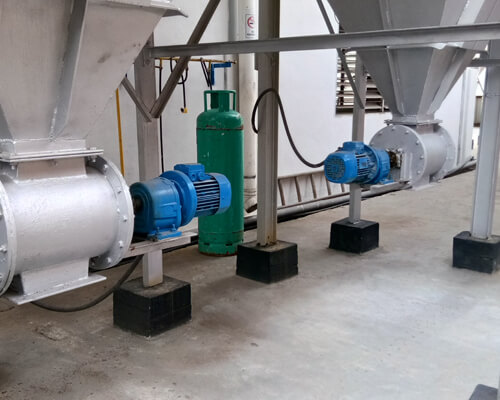
A rotary airlock valve is a mechanical device used to discharge bulk materials from equipment such as hoppers, silos, cyclones, and dust collectors while helping restrict air movement between connected process sections.
- What is the difference between a rotary airlock and a rotary feeder?
The terms are often used interchangeably. A rotary feeder primarily emphasizes controlled material feeding, while a rotary airlock emphasizes limiting air leakage between connected sections. Many industrial valves perform both functions.
- Where are rotary airlock valves used?
They are used in cement plants, food processing, chemical industries, dust collection systems, pneumatic conveying lines, power plants, and other facilities that handle dry bulk materials.
- Can rotary airlock valves handle abrasive materials?
Yes, suitable designs can handle certain abrasive materials. The selection should consider material abrasiveness, rotor and casing construction, wear protection, clearances, and maintenance requirements.
- Are customized rotary airlocks available in Chennai?
Industrial rotary airlocks can be specified or customized according to material type, capacity, pressure conditions, temperature, connection dimensions, and installation requirements. Confirm the available options with the manufacturer.
- How do I select the correct rotary airlock size?
Selection depends on required throughput, material bulk density, rotor speed, pocket volume, fill efficiency, pressure differential, and the characteristics of the material being handled.
- How often should a rotary airlock valve be maintained?
Maintenance frequency depends on operating conditions and material characteristics. Regularly inspect rotor clearances, seals, bearings, drive components, and signs of wear according to the manufacturer’s guidelines.
- What industries require rotary airlock manufacturers in Chennai?
Cement, food processing, chemical, pharmaceutical, power generation, plastics, agriculture, and industrial pollution control sectors commonly use rotary airlock valves.